

Comparison Hyundai i30 III Fastback (facelift 2020) 1.0 T-GDi (120 Hp) & Mazda RX 7 IV Wankel 1.3 (280 Hp)

Add car |
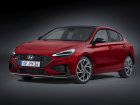
Remove car |
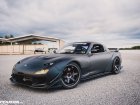
Remove car |
| Brand: | Hyundai | Mazda |
| Model: | i30 | RX-7 |
| Generation: | i30 III Fastback (facelift 2020) | RX 7 IV |
| Engine / modification: | 1.0 T-GDi (120 Hp) | Wankel 1.3 (280 Hp) |
| Production start: | 2020 year | 2000 year |
| Production end: | 2002 year | |
| Coupe type: | Coupe | |
| Num. of Doors: | 5 | 2 |
| Num. of seats: | 5 | 2+2 |
| Fuel Type: | Petrol (Gasoline) | Petrol (Gasoline) |
| Fuel tank volume: | 76 l | |
| Emission standard: | Euro 6d | |
| Power: | 120 hp | 280 hp |
| Max power in: | 6000 rpm. | 6500 rpm. |
| Maximum speed: | 196 km/h | 255 km/h |
| Acceleration from 0 to 100 km/h: | 11.2 sec | |
| Torque: | 172 Nm @ 1500-4000 rpm. | 314 Nm @ 5000 rpm. |
| Engine position: | Front, longitudinal | |
| Engine displacement: | 998 cm3 | 1308 cm3 |
| Fuel System: | Direct injection | Multi-point injection |
| Aspiration / Turbine: | Turbocharger | |
| Position of cylinders: | Inline | Rotary (Wankel) |
| Valvetrain: | - | |
| Number of cylinders: | 3 | 4 |
| Number of valves per cylinder: | 4 | |
| Compression ratio: | 9.1 | |
| Wheel Drive: | Front wheel drive | Rear wheel drive |
| Number of Gears (automatic transmission): | 4 | |
| Number of Gears (manual transmission): | 6 | 5 |
| Length: | 4455 mm | 4285 mm |
| Width: | 1795 mm | 1760 mm |
| Height: | 1425 mm | 1230 mm |
| Wheelbase: | 2650 mm | 2425 mm |
| Front track: | 1460 mm | |
| Rear (Back) track: | 1460 mm | |
| Minimum volume of Luggage (trunk): | 450 l | |
| Maximum amount of Luggage (trunk): | 1351 l | |
| Front suspension: | Independent, Spring McPherson, with stabilizer | Double wishbone |
| Rear suspension: | Multi-link independent | Helical spring |
| Max weight: | 1820 kg | 1490 kg |
| Front brakes: | Ventilated discs | |
| Rear brakes: | Ventilated discs | |
| Kerb Weight: | 1240 kg | 1240 kg |
| ABS: | yes | |
| Steering type: | Steering rack and pinion | Steering rack and pinion |
| Power steering: | Hydraulic Steering | |
| Max. roof load: | 80 kg | |
| Permitted trailer load with brakes (12%): | 1200 kg | |
| Permitted trailer load without brakes: | 600 kg | |
| Tire size: | 225/50 R16 | |
| Wheel rims size: | R16 |