

Comparison Hyundai i20 II (GB) 1.4 CRDi (90 Hp) & Nissan Titan II King Cab (facelift 2020) 5.6 V8 (400 Hp) Automatic

Add car |
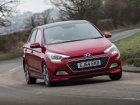
Remove car |
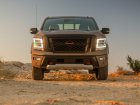
Remove car |
| Brand: | Hyundai | Nissan |
| Model: | i20 | Titan |
| Generation: | i20 II (GB) | Titan II King Cab (facelift 2020) |
| Engine / modification: | 1.4 CRDi (90 Hp) | 5.6 V8 (400 Hp) Automatic |
| Production start: | 2014 year | 2020 year |
| Production end: | 2018 year | |
| Coupe type: | Hatchback | Pick-up |
| Num. of Doors: | 5 | 4 |
| Num. of seats: | 5 | 6 |
| Fuel consumption / economy - urban: | 4.5 - 4.9 l/100 km | 14.7 l/100 km |
| Fuel consumption / economy - extra urban: | 3.3 - 3.5 l/100 km | 10.7 l/100 km |
| Fuel consumption / economy - combined: | 3.7 - 4.1 l/100 km | 13.1 l/100 km |
| Fuel Type: | Diesel | Petrol (Gasoline) |
| Fuel tank volume: | 50 l | 98 l |
| Emission standard: | Euro 6 | LEV3-ULEV200 |
| CO2 emissions: | 97 - 106 g/km | |
| Power: | 90 hp | 400 hp |
| Max power in: | 4000 rpm. | 5800 rpm. |
| Maximum speed: | 175 km/h | |
| Acceleration from 0 to 100 km/h: | 12.1 sec | |
| Torque: | 240 Nm @ 1500-2500 rpm. | 560 Nm @ 4000 rpm. |
| Model Engine: | VK56VD | |
| Engine position: | Front, transverse | Front, longitudinal |
| Engine displacement: | 1396 cm3 | 5552 cm3 |
| Engine oil capacity: | 6.1 l | |
| Coolant: | 13 l | |
| Fuel System: | Diesel Commonrail | Direct injection |
| Maximum engine speed: | 6000 rpm. | |
| Aspiration / Turbine: | Turbocharger / Intercooler | |
| Position of cylinders: | Inline | V engine |
| Valvetrain: | VVEL, CVTCS | |
| Number of cylinders: | 4 | 8 |
| Number of valves per cylinder: | 4 | 4 |
| Compression ratio: | 16 | 11.2 |
| Piston Stroke: | 79 mm | 92 mm |
| Cylinder Bore: | 75 mm | 98 mm |
| Wheel Drive: | Front wheel drive | Rear wheel drive |
| Number of Gears (automatic transmission): | 9 | |
| Number of Gears (manual transmission): | 6 | |
| Length: | 4035 mm | 5796 mm |
| Width: | 1734 mm | 2019 mm |
| Height: | 1474 mm | 1908 mm |
| Wheelbase: | 2570 mm | 3551 mm |
| Front track: | 1514-1520 mm | 1725 mm |
| Rear (Back) track: | 1513-1519 mm | 1725 mm |
| Ride height(clearance): | 140 mm | 211-213 mm |
| Approach angle: | 16.3 ° | |
| Departure angle: | 20.8 ° | |
| Ramp angle: | 20.5 ° | |
| Front overhang: | 815 mm | |
| Rear overhang: | 650 mm | |
| Minimum volume of Luggage (trunk): | 326 l | |
| Maximum amount of Luggage (trunk): | 1042 l | |
| Front suspension: | Independent type McPherson | Double wishbone |
| Rear suspension: | Semi-independent, spring | The spring |
| Max weight: | 1690 kg | 3221 kg |
| Front brakes: | Ventilated discs | |
| Rear brakes: | Disc | |
| Kerb Weight: | 1165 kg | 2512-2489 kg |
| ABS: | yes | yes |
| Steering type: | Steering rack and pinion | Steering rack and pinion |
| Power steering: | Electric Steering | |
| Max. roof load: | 70 kg | |
| Minimum turning circle (turning diameter): | 10.2 m | |
| Permitted trailer load with brakes (12%): | 4250 kg | |
| Tire size: | 185/65 R15; 195/55 R16 | 265/70 R18 |
| Wheel rims size: | 6.0J x 15; 6.0J x 16 | 8J x 18 |